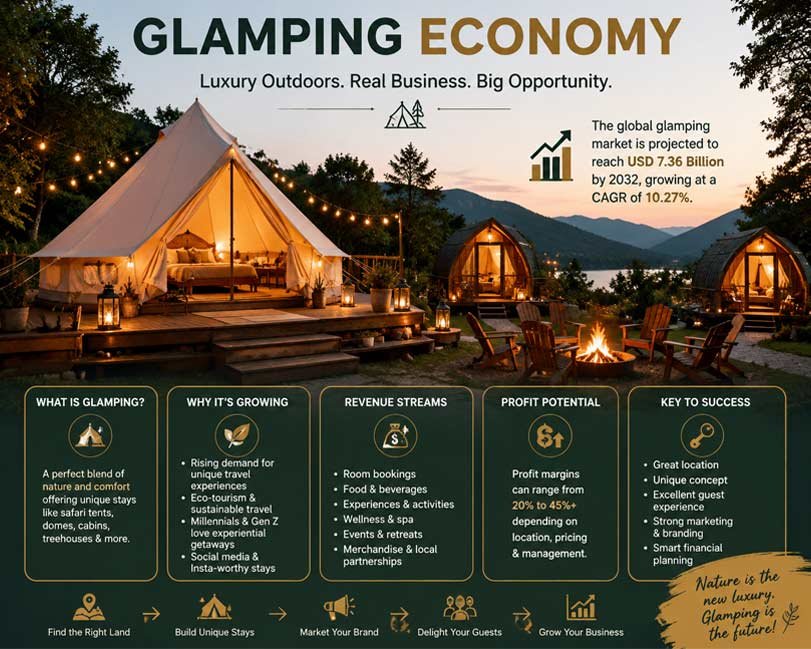
Camping has changed a lot over the past few years. Many people still enjoy sleeping under the stars, but they also want a soft bed, a private bathroom, good food, and modern comfort. This mix of nature and luxury has helped create a fast-growing travel trend known as glamping.
The glamping economy is much bigger than luxury tents. It includes tourism, hospitality, outdoor experiences, local businesses, and real estate. From small family farms to luxury resorts, many businesses are finding new ways to welcome travelers who want something different from a normal hotel stay.
Interest in outdoor travel has also grown because people want peaceful places, fresh air, and unique holidays. Many travelers now choose experiences instead of traditional vacations. A beautiful dome in the mountains or a cozy cabin in the forest often feels more exciting than staying in a city hotel.
In this article, you’ll learn what the glamping economy is, why it has become so popular, how much it costs to start a glamping business, where the money comes from, and what the future may look like for this growing industry.
What Is the Glamping Economy?
The word glamping comes from combining “glamorous” and “camping.” It gives people the chance to enjoy nature without giving up comfort. Instead of sleeping in a simple tent with few facilities, guests can stay in stylish places that feel more like small hotels.
The glamping economy includes much more than accommodation. It covers luxury camping sites, outdoor hospitality, local tourism, food services, wellness activities, guided experiences, and many other businesses that support visitors during their stay.
Many glamping sites also work closely with nearby farms, restaurants, adventure companies, and local shops. This means a successful glamping business can help the local economy by bringing visitors who spend money in the surrounding area.
Technology also plays an important role. Most guests discover glamping sites through websites, social media, search engines, or online booking platforms. Easy online booking and strong digital marketing have helped the industry grow much faster than in the past.
How Glamping Became So Popular
Travel habits have changed over the last decade. Many people now want holidays that feel personal and memorable instead of ordinary. They enjoy staying somewhere that offers beautiful views, peaceful surroundings, and something they cannot experience every day.
Younger travelers, especially Millennials and Gen Z, have helped drive this trend. Many prefer spending money on unique experiences rather than expensive shopping. A weekend inside a forest dome or treehouse often creates memories that last much longer than a standard hotel stay.
Social media has also made a big difference. Attractive cabins, luxury tents, and glass domes often appear in travel photos and videos. These eye-catching places encourage more people to search for similar experiences when planning their next holiday.
Another reason for the industry’s growth is the rising interest in eco-friendly travel. Many guests want vacations that respect nature while still offering comfort. Solar power, rainwater systems, and environmentally friendly building materials have become valuable selling points for many glamping businesses.
Remote work has also opened new opportunities. Some travelers now spend several days or even weeks working from peaceful outdoor locations. Fast internet, private workspaces, and quiet surroundings make glamping attractive for both work and relaxation.
Why Travelers Choose Luxury Camping
Luxury camping offers something that traditional camping and hotels often cannot provide at the same time. Guests enjoy beautiful natural surroundings while still having many of the comforts they use at home.
Many glamping units include comfortable beds, private bathrooms, heating or air conditioning, kitchens, Wi-Fi, and stylish furniture. Some also offer hot tubs, outdoor bathtubs, fire pits, private decks, and large windows with amazing views.
Privacy is another reason people choose glamping. Unlike busy hotels, many glamping sites give guests their own space away from crowds. Couples often enjoy romantic weekends, while families appreciate having room to relax together.
Wellness has become another important part of the glamping economy. Some sites offer yoga classes, meditation sessions, spa treatments, sound baths, guided walks, and healthy local food. These extra experiences help guests enjoy a complete holiday instead of simply booking a place to sleep.
Many sites are also pet friendly, making it easier for families to travel with their dogs. This small feature can increase bookings because many travelers prefer not to leave their pets at home.
Popular Types of Glamping Stays
One of the biggest strengths of the glamping economy is its wide variety of accommodation. Every type offers a different experience, allowing businesses to attract different kinds of travelers.
Luxury safari tents remain one of the most popular choices. They offer large living spaces, proper beds, furniture, and often private bathrooms. They are usually quicker and less expensive to install than permanent buildings.
Geodesic domes have become well known because of their modern design and large windows. Many guests enjoy watching the stars from inside the dome while staying warm and comfortable.
Cabins, pods, shepherd’s huts, and tiny homes are also popular because they can be used during different seasons. Many include kitchens, bathrooms, and heating systems, making them suitable throughout the year.
Treehouses continue to attract couples and families looking for something different. Vintage trailers, Airstream campers, and restored caravans offer a fun mix of comfort and nostalgia. Floating cabins provide another premium option for travelers who want a unique experience near lakes or rivers.
The type of accommodation also affects business costs. Luxury treehouses and floating cabins usually require higher investments than safari tents or simple cabins. However, they may also allow owners to charge higher nightly rates if the location and guest experience match the price.
How Big Is the Glamping Market?
The glamping economy has grown from a small travel idea into a global business. Industry reports estimate that the worldwide market was worth several billion dollars in the mid-2020s and is expected to continue growing steadily through the early 2030s.
Different research companies report slightly different numbers, but most agree on one thing: demand continues to increase. Many forecasts expect yearly growth of around ten percent, showing that interest in luxury outdoor stays remains strong.
Europe currently represents one of the largest glamping markets. Countries with beautiful countryside, national parks, lakes, and coastal areas continue to attract both local and international visitors. North America also remains an important market thanks to its large outdoor tourism industry.
Several factors are supporting this growth. Eco-tourism, wellness travel, remote work, weekend breaks, and experience-based tourism continue to attract new guests. Travelers between 18 and 32 years old are especially active in booking unique outdoor stays.
As more investors notice these trends, new glamping businesses continue opening in forests, mountains, farms, vineyards, deserts, beaches, and lakeside locations. This growing competition is encouraging operators to improve guest experiences while offering more creative accommodation options.
What It Costs to Start a Glamping Business
Starting a glamping business can require a small investment or a very large one, depending on the location, number of units, and level of luxury. A simple site with only a few units costs much less than a full luxury resort with premium facilities.
One of the biggest expenses is the land itself. Some business owners buy rural land, while others lease it. Besides the purchase price, owners often need to prepare the site by improving drainage, building access roads, adding parking areas, and creating walking paths.
Utilities are another major cost. Water, electricity, septic systems, internet service, and waste management must all be planned before welcoming guests. These costs can rise quickly in remote areas where services are not already available.
Accommodation units are usually the largest single investment. Luxury safari tents, geodesic domes, cabins, shepherd’s huts, vintage trailers, treehouses, and floating cabins all have different purchase prices and setup times. Many new operators begin with four to eight units so they can control costs while building their reputation.
Furniture, bedding, kitchens, bathrooms, outdoor seating, lighting, and guest amenities also add to the startup budget. At the same time, owners need to invest in a professional website, booking software, branding, photography, and marketing so travelers can easily find and book the property.
Because unexpected costs are common, many business experts recommend keeping an emergency budget of around ten to fifteen percent. Construction delays, weather, or utility work can increase spending, so careful planning is very important before opening.
Permits, Land, and Site Planning
Choosing the right land is about much more than finding a beautiful view. Before buying or leasing a property, owners should make sure the land can legally be used for a glamping business. Local planning rules, zoning laws, and environmental requirements can be very different from one area to another.
Many projects need planning approval, building permits, environmental reviews, health and safety inspections, fire safety checks, and business licenses before guests can stay overnight. Completing these steps early can prevent expensive delays later.
Good site planning also improves the guest experience. Enough space should be left between units to create privacy and reduce noise. Safe walking paths, parking areas, outdoor lighting, and emergency access are also important parts of a successful layout.
The location itself often has the biggest influence on long-term success. Easy road access, attractive scenery, nearby tourist attractions, and peaceful surroundings can all help increase bookings. At the same time, owners should think about future maintenance, weather conditions, insurance, and local demand before making a final investment decision.
How Glamping Sites Make Money
A successful glamping business usually earns money from more than overnight stays. The room rate is often the biggest source of income, but smart owners look for other ways to increase what each guest spends during a visit.
Nightly prices depend on the location, season, and level of comfort. A simple luxury tent may cost much less than a fully equipped cabin with a private hot tub. Holiday weekends and busy travel seasons often allow higher prices than quieter times of the year.
Many sites also earn extra income through food and drinks. Breakfast baskets, picnic boxes, campfire dinners, and locally made products can add value while giving guests a better experience.
Activities are another important income source. Guided hikes, stargazing, cycling, yoga classes, nature tours, and wellness sessions encourage guests to spend more without needing more accommodation units.
Some owners also host small weddings, family celebrations, company retreats, and private events. These bookings can help fill the calendar outside the busiest holiday periods and create steady income throughout the year.
Glamping Profits and Return on Investment
Every business owner wants to know one thing: can a glamping site make money? The answer depends on several factors, including location, pricing, guest demand, operating costs, and how well the business is managed.
One important measure is occupancy. This simply means how often the accommodation is booked. Sites with strong occupancy throughout the year usually have a better chance of earning healthy profits.
Pricing also matters. Many businesses adjust prices based on weekends, holidays, school breaks, local events, and demand. This flexible approach can help increase yearly income without adding more units.
Running costs should never be ignored. Cleaning, maintenance, utilities, insurance, staff wages, marketing, booking platform fees, and repairs all reduce the final profit.
Many owners focus on long-term growth instead of quick returns. Improving guest reviews, adding new experiences, and expanding slowly can create a stronger business over time than growing too quickly.
Glamping vs Traditional Camping
Traditional camping and glamping both allow people to enjoy the outdoors, but they attract different kinds of travelers.
Traditional campsites usually offer a lower-cost experience. Guests often bring their own tents or campers, and facilities are more basic. This keeps prices lower but also limits how much each visitor spends.
Glamping focuses on comfort and convenience. Guests are willing to pay more because they receive a ready-to-use space with furniture, comfortable beds, and extra features that make the stay feel special.
Glamping businesses normally need a larger investment at the beginning. However, they also have the chance to earn more from each booking through premium accommodation and extra guest services.
The best choice depends on the owner’s goals, budget, available land, and local tourism demand. In some areas, traditional camping may work well, while other locations are better suited to luxury outdoor stays.
Real Glamping Business Examples
Around the world, many successful glamping businesses started with only a few units. Instead of building a large resort immediately, owners tested the market and expanded after learning what guests enjoyed most.
Some farm owners have added glamping to create a second source of income. Visitors enjoy peaceful countryside stays while also buying local food, joining farm activities, or visiting nearby attractions.
Other businesses have built their reputation by offering unusual accommodation, beautiful views, and excellent customer service. Positive online reviews often become one of their strongest marketing tools.
These examples show that success is not only about spending more money. Good planning, a great guest experience, and careful business decisions usually matter much more over the long term.
Main Risks in the Glamping Economy
Like any business, the glamping economy also has risks. Understanding these challenges before investing can help owners make better decisions.
Weather is one of the biggest concerns. Heavy rain, storms, floods, or extreme heat can affect bookings, damage buildings, and increase maintenance costs.
Seasonal demand is another challenge. Some destinations stay busy for most of the year, while others experience long quiet periods. Planning for slower months is an important part of financial success.
Legal rules should also be checked carefully. Planning permission, zoning laws, environmental protection, and safety requirements are different in every area. Missing one requirement can delay a project or increase costs.
Competition is growing as more businesses enter the market. Owners need good marketing, quality accommodation, fair prices, and excellent guest service to stand out.
Glamping Trends to Watch
The glamping economy continues to change as traveler interests evolve. Guests now look for experiences that feel personal instead of standard.
Eco-friendly design remains an important trend. Solar energy, water-saving systems, recycled materials, and responsible building methods appeal to travelers who care about the environment.
Wellness travel is also growing. Quiet nature breaks, yoga weekends, spa treatments, and digital-detox holidays continue attracting people who want to relax away from busy daily life.
Technology is improving the guest experience as well. Online booking, contact-free check-in, smart locks, and simple communication tools make stays easier for both guests and business owners.
Many sites are also becoming more family friendly and pet friendly while adding local experiences that help visitors learn about nearby culture, food, and nature.
Is Glamping a Smart Business Idea?
Glamping can be a good business for people who enjoy hospitality, outdoor tourism, and creating memorable guest experiences. It is not simply about buying luxury tents. Success depends on careful planning and good management.
Before investing, owners should study local tourism, competition, travel seasons, and customer demand. A beautiful location alone does not guarantee bookings.
Starting with a smaller number of units can reduce financial risk while allowing owners to improve the business over time. Many successful operators have grown step by step instead of expanding too quickly.
Strong branding, honest marketing, clean facilities, and friendly customer service often help businesses earn repeat visitors and positive reviews.
Bottom Line
The glamping economy has grown from a travel trend into an important part of modern outdoor hospitality. It offers exciting opportunities for business owners who understand their market, plan carefully, and focus on giving guests a memorable experience. While there are costs and risks, a well-managed glamping business can create long-term value by combining comfort, nature, and unique travel experiences in a way many modern travelers appreciate.
(FAQs)
Can a small glamping business be successful?
Yes. Many successful businesses begin with only a few units and expand after building a good reputation and steady customer demand.
What makes a good glamping location?
Easy access, attractive scenery, nearby activities, privacy, and strong local tourism demand are all important factors.
What are the biggest costs when starting?
Land, site preparation, accommodation units, utilities, permits, furniture, and marketing are usually the largest startup expenses.
What are the biggest risks?
Weather, seasonal demand, changing regulations, rising operating costs, and increasing competition are some of the main challenges.
Is the glamping economy still growing in 2026?
Industry reports continue to show strong interest in luxury outdoor travel, although growth and business performance vary by country, location, and market conditions.
Also Read: Exhentaime: A Simple Guide to Better Time Management