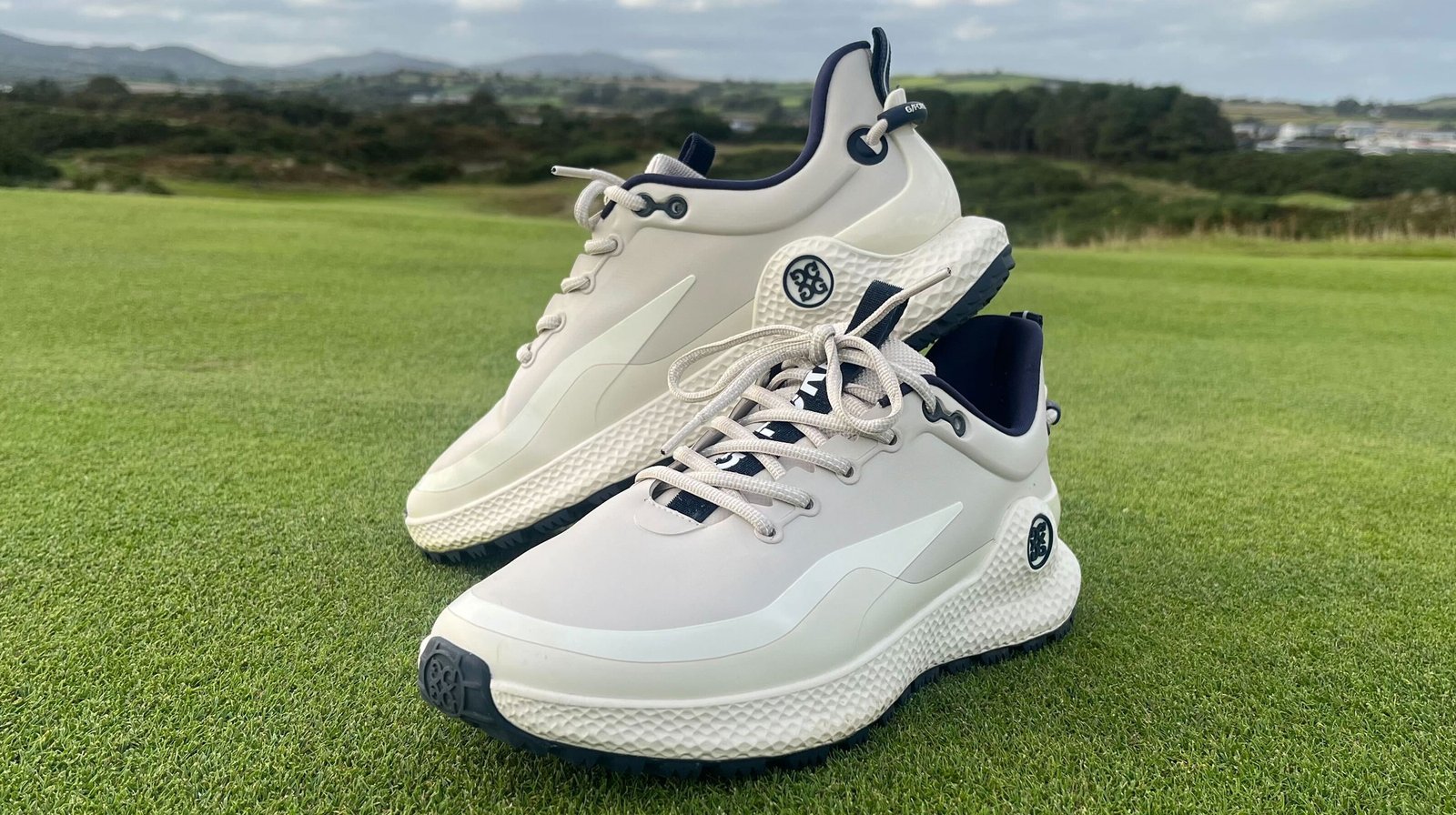
Golf is a sport where minor details can lead to significant outcomes. A slight adjustment in equilibrium can transform a sharp hit into a feeble attempt. A brief pause during the downswing can alter where you make contact. When your feet experience discomfort or instability, your body instinctively begins to make subtle adjustments that often go unnoticed.
Shoe fit is crucial for reasons that extend well beyond mere comfort. The footwear you choose plays a crucial role in your swing technique. Their influence shapes your sense of grounding, the assurance with which you pivot, and the effectiveness of your weight transfer from the trail side to the lead side.
For those with wider feet, this consideration takes on greater significance. A shoe that’s too narrow is more than just a minor inconvenience. It may limit the natural spread of your toes, diminish stability, and subtly alter your footwork, particularly as the round progresses.
This guide explores the impact of golf shoe fit on swing stability and weight transfer, what to consider when making a purchase, and how to effectively test shoes to avoid being misled by a brief fitting.
Spacious golf shoes enhance swing stability and weight transfer by permitting natural toe splay, alleviating forefoot pressure, and establishing a more grounded foundation. When shoes are excessively narrow, golfers frequently adjust by gripping with their toes, restricting their rotation, or altering their weight distribution. This can lead to decreased consistency and heightened fatigue. The perfect fit for golf shoes features a spacious toe area, a snug heel grip, a sturdy midsole, and dependable traction that enables assured pivots on the course.
Why fit changes your swing (even if you don’t notice)
The foundation of your swing begins with the ground beneath you.
Before the club takes action, your feet are already in motion:
- They enhance your alignment.
- They maintain equilibrium while handling takeout.
- They apply pressure along the edge of the trail.
- They assist you in maneuvering and pivoting around the ball.
- The finish is governed by the way your weight shifts to the lead side.
If your footwear disrupts any of that, your swing adjusts accordingly. You may not perceive it as “shoe discomfort.” It manifests as a lack of coherence.
Typical problems related to footwear during a swing consist of:
Experiencing uncertainty in fully rotating due to a lack of confidence in traction.
- Experiencing a sense of imbalance as you step onto the trail foot.
- Experiencing a sense of being “trapped” as your feet struggle to move freely.
- Struggling to maintain stability on irregular surfaces.
- Ending up with aching feet or tense calves due to your tension.
Footwear alone won’t enhance your skills, but it can certainly prevent them from being undermined.
The wide-foot advantage most golfers miss
Having wide feet is not an issue. They merely serve as a necessary form.
When wide feet are crammed into narrow shoes, the golfer sacrifices an essential element of stability: toe splay.
Toe splay refers to the phenomenon where your toes naturally spread apart when bearing weight. Your foot establishes a wider, more stable foundation. When toes are confined, balance feels less instinctive, prompting the body to adjust accordingly.
This compensation frequently manifests as: Increased tension in the feet and calves.
- A decrease in confidence leads to a shift in pressure.
- A more concise and careful motion.
- Increased weariness by the final holes.
A spacious shoe offers more than just comfort. It can enhance your stance, providing a more stable foundation that facilitates a smoother weight transfer.
The three swing mechanics your shoes influence most
1) Swing stability: your ability to stay planted during rotation
Stability in golf transcends mere stillness. It’s about maintaining composure while spinning rapidly.
A shoe that is excessively narrow can create a sensation of instability, particularly when the outsole base is also slim. A shoe that is overly soft may cause instability when you shift your weight side to side.
Wide-fit golf shoes enhance stability when they offer:
- A broader base beneath the front of the foot.
- A toe box designed for toes to rest comfortably and spread naturally.
- A midsole that maintains its structure without collapsing sideways.
Serenity is the essence of stability. If you find yourself struggling against the shoe to maintain your balance, it’s not the right fit for your mechanics.
2) Weight transfer: how efficiently pressure moves from trail to lead side
- Weight transfer is more than merely a “shift.” It’s a sensation coursing through your feet.
- During the setup and takeaway, you create tension on the trailing side.
- As you transition, start to shift your pressure toward your lead foot.
- Upon impact, you achieve stability and rotation, predominantly concluding on your lead foot.
If your shoes fit too snugly in the front part, you might instinctively refrain from putting weight on and rolling through your foot. When the heel slides, it indicates that the foot lacks proper support. In situations where traction is lacking, it may be prudent to decrease rotation to ensure safety.
A wider fit alleviates pressure points that can disrupt the flow of natural movement.
3) Traction confidence: whether you trust the ground enough to swing fully
Issues with traction may not always manifest as an obvious slip. At times, they manifest as a cognitive hindrance.
- Your rotation is less aggressive.
- You reduce the follow-through.
- One approaches the slippery ground with a sense of wariness.
- You steady yourself in your knees and ankles.
The emphasis on caution leads to a decrease in both speed and consistency.
Golf shoes ought to empower your swing. When confidence in your stability wavers, your body instinctively safeguards itself rather than allowing for uninhibited movement.
What to look for in wide golf shoes
A toe box that doesn’t taper aggressively
Many shoes tend to have a spacious midfoot area while feeling constricted at the toe box. The taper constricts the toes and limits their natural spread.
In a good wide toe box:
- As one stands, the toes dance with delightful freedom.
- The big toe remains in its natural position, not pushed inward.
- The little toe is not touching the side.
A wide outsole platform, not just a stretchy upper
Certain shoes feature uppers that offer flexibility, yet the sole beneath remains slim. This leads to a lack of stability.
A solid foundation is essential for those with wider feet. The platform ought to align with your unique footprint.
Turn the shoe upside down and examine it. If it tapers significantly beneath the forefoot, it could lack stability during rotation.
A secure heel hold
Heel slip alters pivot dynamics and enhances friction. The sensation of weight transfer becomes less stable.
A quality golf shoe must secure the heel comfortably, allowing for a snug fit without constricting the forefoot excessively.
Stable cushioning instead of ultra-soft foam
The game of golf requires a sideways force. Soft shoes may bend sideways when you turn.
Seek out cushioning that provides a sense of support and stability, avoiding anything that feels overly bouncy or unstable.
Reliable outsole traction for grass
Regardless of whether it features spikes or not, the outsole must provide reliable traction.
Damp conditions are a frequent occurrence in the UK. Even the morning dew can render the grass quite slick. Confidence in traction is essential for rotation.
For a solid foundation in selecting the best options tailored for golf, explore wide golf shoes and utilize the fit tests outlined below to ensure your selection performs well on the course, rather than just during a brief fitting.
The fit tests that reveal whether the shoe will work on the course
Test 1: The standing toe check
Stand and wiggle toes.
If you experience side pressure, it will intensify after completing 18 holes of walking. Toe squeeze is a persistent issue.
Test 2: The pivot test
Perform a gentle practice swing without using a club.
- Are you experiencing a sense of stability while rotating?
- Do you sense your foot slipping off the edge?
- Do you sense the shoe compress to the side?
If you experience a wobble, it could indicate a lack of stability.
Test 3: The heel slip test
Move swiftly and incorporate some rapid shifts in direction.
Heel slip presents a challenge related to friction and control during pivoting. When your heel consistently rises, a sense of stability may elude you.
Test 4: The “late-round” test at home
Put on the shoes for 30 to 60 minutes indoors, then take some practice swings.
Footwear tends to change in sensation as time goes by. That’s when the pressure points emerge.
Mistakes wide-footed golfers make (and how to avoid them)
Sizing up in length to get width
This frequently leads to slipping. Sliding compromises stability and generates localized heat areas.
Adjust the width and shape rather than extending the length.
Buying shoes that feel tight because they feel “secure”
Confinement does not equate to assistance. Tightness is pressure.
Support is derived from a solid foundation and secure heel placement, rather than from constricting the toes.
Ignoring traction until a wet round exposes it
Selection of traction must be based on your specific conditions rather than aesthetics. When playing in wet conditions, reliable grip is essential.
Overprioritising softness
Softness can exude a sense of luxury in the boutique. On the course, there can be a sense of unpredictability, particularly during the moments of rotation.
In golf, stability and support surpass mere softness.
FAQs
Can wide golf shoes actually improve performance?
Enhancing consistency can be achieved by minimizing discomfort and promoting natural toe splay and balance. While they won’t substitute for solid technique, they can eliminate issues related to footwear that affect swing.
Are wide shoes only for golfers with visibly wide feet?
Not always. Certain golfers appreciate having additional space for their toes to accommodate swelling, enhance comfort, and ensure stability, particularly during extended rounds.
Should golf shoes feel snug?
They ought to provide a sense of security, particularly around the heel and midfoot, while allowing for comfort in the forefoot. Toe squeeze diminishes both comfort and stability.
Spiked or spikeless for wide golf shoes?
Both options can be effective if the traction is dependable. Spikes tend to excel in moist environments, whereas spikeless options offer a broader range of adaptability. Select according to the circumstances of the course and your level of confidence in making adjustments.
How can I tell if my golf shoes are too narrow?
Common indicators include forefoot pressure, numbness, toe rubbing, redness following the round, and a sensation of reduced stability during rotation.
Final takeaway
The essence of golf lies in its connection to the ground. If your footwear limits your feet or diminishes stability, your swing adjusts, frequently without your awareness.
Spacious golf shoes can truly enhance your game by allowing your toes to spread comfortably, improving your balance, alleviating pressure, and providing a solid foundation during rotation and weight transfer.
Seek out a spacious toe area, a broad and sturdy base, a secure fit around the heel, reliable cushioning, and dependable traction.
For those looking to explore options that cater to wider feet in the realm of golf, it’s advisable to begin with wide golf shoes. After selecting a pair, ensure you assess them through pivot, heel slip, and toe room evaluations before making a final decision.
The base of every swing lies in your feet. Ensure your footwear honors that foundation.