Blog
Through the Looking Glass: The Pulse and Paradox of Retinal Disease Modelling
Published
1 month agoon
By
IQnewswire
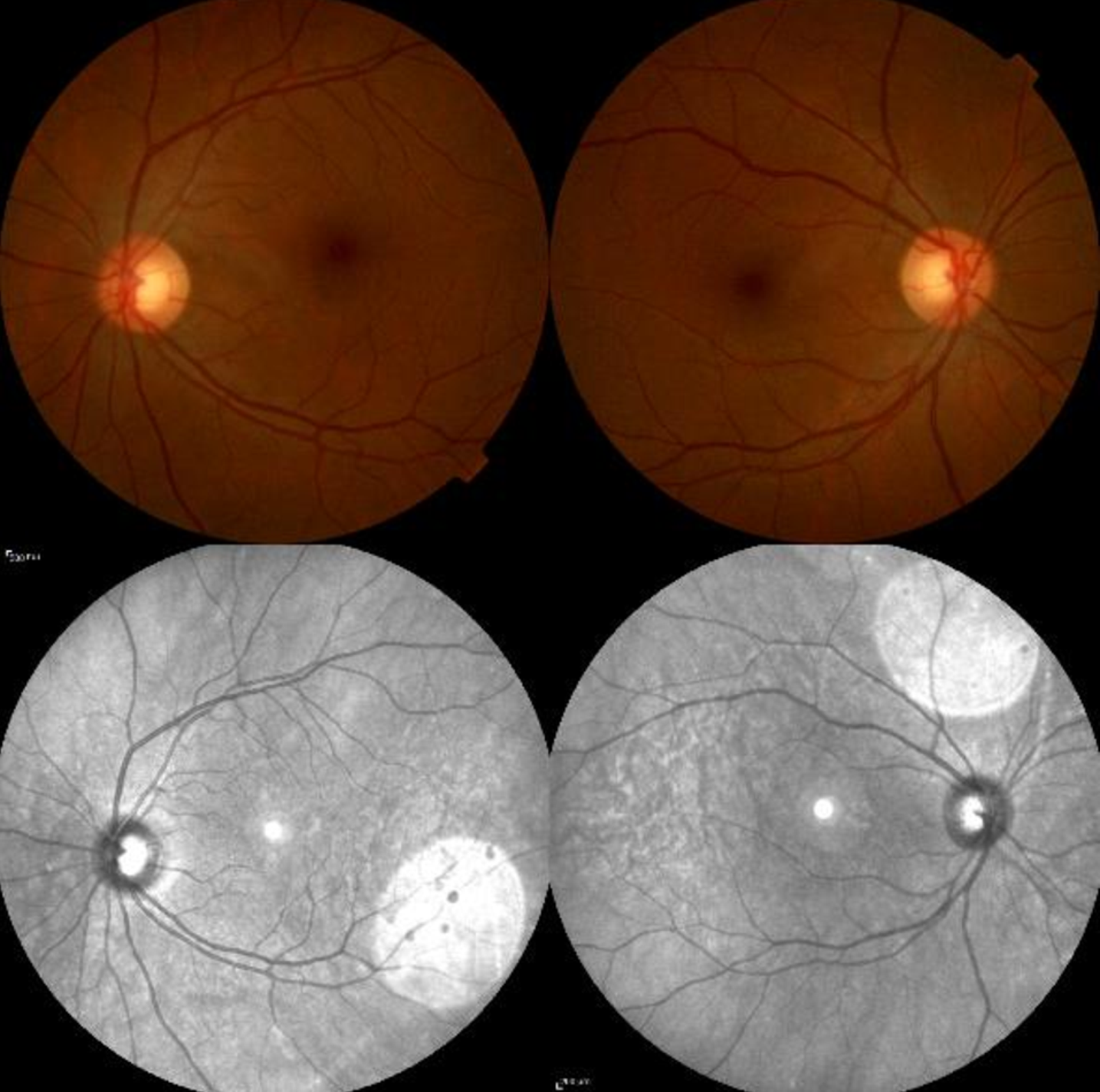
For such a thin layer tucked at the back of your eye, the retina does an outsized job: it gathers light and lays the groundwork for everything you see. A disruption here, be that through inherited conditions such as retinitis pigmentosa or acquired nemeses like age-related macular degeneration, can swiftly turn life familiar into something far less inviting. There are dozens of ways a retina might rebel. Some diseases sneak in with a slow fade, others storm the gates with acute vision loss.
What links these diseases is complexity. Consider the retina as a city, pulsing with neurons and pathways: when one district falters, ripple effects reach distant neighbourhoods. It is never a solo act. Symptoms can range from blurry edges to outright central blind spots, you may notice shapes morphing or colours draining away. The common thread is the retina’s vulnerability and its crucial task. To probe its mysteries, you require imaginative models, ones that can both mimic these failures and help you design strategies for rescue.
Significance of Disease Modeling in Ophthalmology
Peek beneath the surface and you might find that progress in retinal medicine is woven through with the art of modelling. Disease models operate like rehearsal stages: allowing you to test, tweak and anticipate every move before stepping into the unpredictable. In ophthalmology, these models are not only luxury, they are lifelines.
You will soon realise that much of what you know about retinal disease comes from systems that replicate, to some degree, the complex choreography inside the eye, and is why retinal disease modelling has become so important. These models help researchers pinpoint where and why a process trips up, and test potential therapies without needless risk to people. Drug responses, genetic undercurrents, the subtle play between supporting and nerve cells, all unfold in a controlled theatre. The act is part science, part puzzle. Indeed, models serve as scouts, venturing where direct observation just can’t reach. For patients and doctors, this means shorter journeys from insight to intervention. The goal is not only to predict trouble but to wrestle new hope out of uncertainty.
In Vitro Models for Retinal Disease
A petri dish may look lifeless, but in the hands of vision scientists, it can echo with the drama of a living retina. In vitro models put retinal cells in the spotlight, giving you control that nature rarely permits. Here, you can coax human stem cells into becoming retinal pigment cells, or conjure organoids that resemble the retina’s layers, a miniature echo of your own tissue.
So, what can you uncover here? You will find that these setups permit the dissection of pathways, gene by gene, or reveal toxic side effects of drugs before they ever reach clinical trials. For rare or genetically complex diseases, this method lets you explore differences between individuals, mapping the kind of personalised risks and responses traditional models rarely touch. Researchers often weave CRISPR gene-editing into these models, recalibrating faulty DNA with something akin to a surgeon’s precision, although, as you might guess, nothing in biology behaves perfectly every time.
Yet it is not all smooth running. While these dishes reveal layers of detail, what’s missing are systemic cues: blood flow, immune response, the unique architecture of a living eye. For these, you must look beyond glassware.
Animal Models in Retinal Research
Move further into the labyrinth and you arrive at animal models, living systems that encapsulate the tapestry of a functioning organism. Mice, zebrafish, even pigs and non-human primates carry mutations and maladies surprisingly reminiscent of human eye disease, allowing scientists to see drama unfold in three dimensions.
If you have ever wondered why a mouse or fish winds up the subject of an ophthalmologist’s study, it is because entire genetic scripts can be edited, erased or amplified at will. These animals, with their living immune systems and vascular networks, display outcomes that bridge the petri dish and the clinic.
For drug trials and gene therapies, animal models offer predictive power. A mouse treated with a new RNA therapy, say, might regain lost vision, unlocking clues for potential breakthroughs. Of course, there are ethical puzzles here: you must weigh scientific value against animal welfare. And while animals help untangle phenomena beyond the reach of a test tube alone, their retinas are never identical to yours. Results can shimmer with hope, yet the leap to human benefit often steers through a fog of uncertainty.
Emerging Technologies and Future Directions
Peering over the horizon, you might spot the silhouettes of technologies that promise to redraw your expectations. Three-dimensional bioprinting rises as a craft where scientists can layer retinal cells, ink-like, onto scaffolding, creating something approaching the real architecture of the eye. You will find that artificial intelligence now prowls datasets, learning to predict failures and successes in both modelling and intervention, making connections that elude even seasoned researchers.
Gene editing, which once tiptoed around ethical boundaries, now marches forward with the prospect of correcting inherited retinal diseases at their source. Even organ-on-a-chip platforms are moving from curiosity to contender: here, multiple cell types mimic the microenvironments of the living eye, complete with microfluidic channels that pulse like capillaries.
The trend? A relentless blending of biology and technology, where disease models grow not only more accurate but more reflective of individual variation. In the case that you are awaiting personalised medicine, these tools may well be the bridge. Still, as you will see, the landscape has obstacles lying in wait.
Challenges and Limitations in Retinal Disease Modeling
Even the best model leaves a trail of what-ifs behind. For all their fidelity, in vitro and animal models stray from human realities. Cultured cells lose some context, animal retinas differ in subtle yet meaningful ways, what brightens the prospects in a lab does not always translate clinically.
You will find that genetic diversity is still only sketched in these systems, whereas the human experience is messy, shaped by environment, lifestyle and intricate DNA tangles. Modelling diseases with late onset or rare presentations continues to frustrate researchers, as there is no perfect surrogate for the human eye in its natural habitat.
Financial considerations you can hardly ignore, complex models demand time, specialist skill and resources beyond what many labs possess. Add evolving debates on ethics, and you will see the path is as much moral as it is scientific. Yet, progress tends to zigzag. Each challenge carves a spur for innovation, urging the field toward ever more faithful mirrors of your sight.
And In Closing
There you have it, retinal disease modelling is less an exact science, more an intricate tapestry with threads of biology, hope and technological brinkmanship woven through. You might think of it as the navigational chart you never knew your eyes needed. The questions persist and the answers evolve. Your sight, taken for granted on most days, anchors a remarkable community of thinkers, tinkerers and trailblazers at work behind the scenes. If there is one certainty, it is that your perspective, both literal and metaphorical, owes more to their artistry than meets the eye. Next time you glance in the mirror, remember: through the looking glass, the story continues.

The Ultimate Guide to Choosing the Perfect Body Moisturiser for Radiant Skin
Miles Xavier Tate: The Quiet Son of Hollywood’s Larenz Tate
Krista Visentin: The Private Life of David Visentin’s Wife
Aaron Hernandez: A Glimpse into His Life, Legacy, and the Intriguing Story of Aaron Hernandez’s House
From Research to Results: How Legal AI Supports Lawyers
Jody Morrill Wolcott: The Quiet Woman Behind Johnny Carson’s Early Life
Orthodontic Treatment Options Every Patient Should Know
How to Plan a Short Wellness Escape Without Long Travel
Quick and Reliable Solutions for Your Moving Needs
What Businesses Should Know About Post-Quantum Readiness
Revolutionizing Healthcare: The Emergence of AI-Driven Analytics
Carol Kirkwood’s Journey: Her Real Age, Husband, Career, and More
How Machine Learning and AI are Redefining the Future?
Aliza Barber: Meet Lance Barber’s Wife, Age, Life, Profile, Career and Net Worth
Evelyn Melendez: Jordan Knight’s Wife Bio, Marriage, Family, Career and Net Worth
Ilan Tobianah Biography: Family, Marriage, Lifestyle, Career and Net Worth
King Von’s Autopsy Report: The Truth Behind the Tragic Death
Who was Alice Marrow? Everything to Know About Ice-T’s and His Mother
Body Positivity and Bodycon: Embrace Your Shape with Homecoming Dresses
Meet Otelia Cox: The Supportive Wife of Tony Cox – A True Fairy Tale Romance
The Ultimate Guide to Choosing the Perfect Body Moisturiser for Radiant Skin
Miles Xavier Tate: The Quiet Son of Hollywood’s Larenz Tate
Krista Visentin: The Private Life of David Visentin’s Wife
Aaron Hernandez: A Glimpse into His Life, Legacy, and the Intriguing Story of Aaron Hernandez’s House
From Research to Results: How Legal AI Supports Lawyers
Jody Morrill Wolcott: The Quiet Woman Behind Johnny Carson’s Early Life
Orthodontic Treatment Options Every Patient Should Know
How to Plan a Short Wellness Escape Without Long Travel
Quick and Reliable Solutions for Your Moving Needs
What Businesses Should Know About Post-Quantum Readiness
Category
Trending
-
Health2 years agoRevolutionizing Healthcare: The Emergence of AI-Driven Analytics
-
News5 months agoCarol Kirkwood’s Journey: Her Real Age, Husband, Career, and More
-
Technology2 years agoHow Machine Learning and AI are Redefining the Future?
-
Celebrity2 years agoAliza Barber: Meet Lance Barber’s Wife, Age, Life, Profile, Career and Net Worth