Connect with us

Health

Can Family History Improve Public Health? What Ancestry Data Could Mean for Future Care

Published

on

Can Family History Improve Public Health? What Ancestry Data Could Mean for Future Care
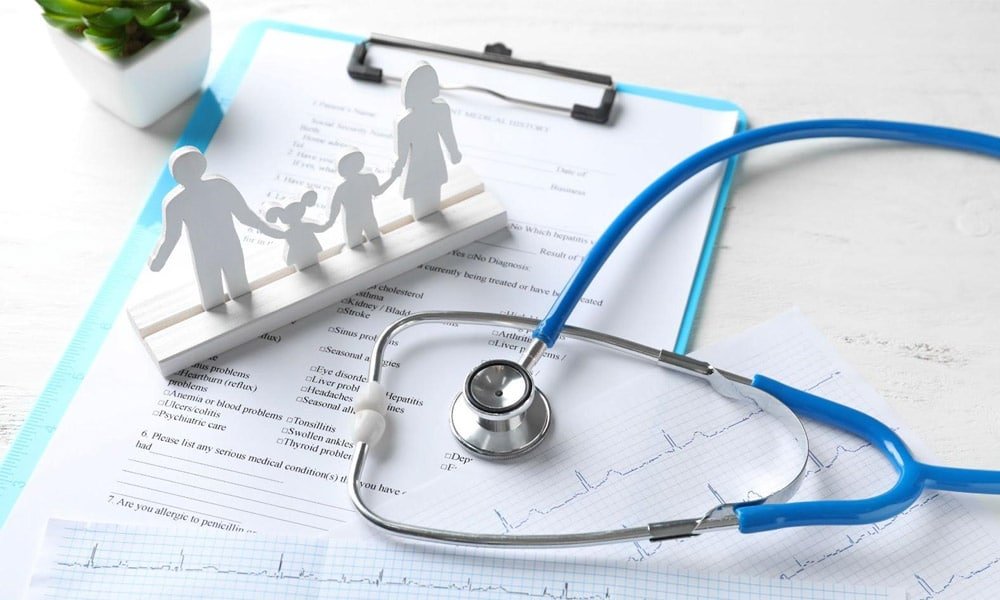
Can family history improve public health is not just a research question anymore. It is becoming a practical one. Doctors, health systems and even governments are starting to look seriously at something our grandparents always understood instinctively:

What runs in the family matters.

For a long time, medicine treated family history as a side note on intake forms. A few boxes to tick, if anyone remembered. Today, as ancestry data and genetic tools become more accessible, that same information is starting to look like one of the most powerful predictors we have for future care.

The interesting part is not just what this means for individuals, but what it could mean for public health as a whole.

Why family history still beats most gadgets

Health tech has exploded in recent years. Watches measure heart rate and sleep, apps count steps, rings estimate recovery. All of that is useful. But if you ask many clinicians what they would rather have for long term risk, a year of wearable data or a clear three generation family history, the answer is often the latter.

Patterns across decades tell you things that a few months of sensor readings cannot. Repeated cancers in one branch. Diabetes in several siblings. Early heart disease on one side of the family but not the other. Mental health conditions that appear in cycles.

Well maintained ancestry information turns those observations from vague impressions into something you can work with.

That is one reason more people are starting family trees on free genealogy sites (https://www.yourroots.com). They are not just chasing names and dates. They are starting to add context: causes of death, major illnesses, lifestyles. Over time, those details become a health map as much as a heritage map.

When ancestry data fills gaps in medical records

Health systems often struggle with incomplete data. People move countries, change providers, lose paperwork, forget details. Records get scattered. Family stories get shortened to “he was not well” or “she died young”.

Ancestry research can quietly plug some of those gaps. When relatives connect, they sometimes discover that what they thought were isolated events are part of a pattern. What seemed like a “one off” stroke becomes the third in that branch. A relative’s “weak heart” turns out to be a specific cardiomyopathy diagnosed elsewhere.

When people take the extra step to upload raw DNA data and connect those results to their trees, they can tie certain genetic markers to real lived outcomes in their family. That blending of story and science is extremely valuable. It does not replace clinical testing, but it can raise important questions earlier.

At scale, if enough people consent to share anonymised versions of this combined data, public health planners can start to see where undiagnosed hereditary risks might be hiding in the population.

Risk is more than genes, but genes are part of it

Public health is often about environment. Clean water, air quality, food systems, housing, access to care. None of that should be ignored. But within those environments, some people will always be more vulnerable than others because of inherited tendencies.

Family history and ancestry data help identify:

  • who might benefit from earlier screening

  • which groups may need different thresholds for “normal” in certain tests

  • where culturally tailored interventions are most needed

  • which communities carry specific hereditary conditions at higher rates

DNA upload platforms already show how traits and risks can be inferred at an individual level. The leap for public health is to move from “what does this mean for one person” to “what patterns do we see across thousands of people with similar backgrounds”.

Done carefully and ethically, that could mean catching problems decades earlier than we do now.

Precision public health instead of one size fits all

One of the big criticisms of public health messaging is that it often sounds generic. “Eat better”, “exercise more”, “get screened at this age”. It is not that these messages are wrong. They are just blunt.

Ancestry aware approaches open the door to something more precise.

Imagine outreach campaigns that say:

  • People with this type of ancestry and this family pattern may need screening five or ten years earlier

  • Families from this region with a history of these conditions might qualify for specific genetic counselling

  • Communities with shared roots in this area may be at higher risk for certain deficiencies or responses to medication

None of this means treating people as statistics. It means using ancestry and family history to focus limited resources where they can have the greatest impact.

Genealogy enthusiasts already use family tree mapping tools to visualise how their own relatives moved and clustered. Public health teams could use similar ideas on a larger, anonymised scale to see where risks concentrate and where support is most urgently needed.

The ethical weight of ancestry in health

Of course, there is a serious side to all of this. Turning ancestry into a health tool comes with risks.

Questions that cannot be ignored include:

  • Who owns the data that connects family history, DNA and health outcomes

  • How do we prevent misuse, such as discrimination based on perceived genetic risk

  • How do we make sure ancestry based insights improve care rather than deepen stigma

  • What happens when heritage information reveals painful or contested identities

Any attempt to bring ancestry into public health strategies will need strong safeguards, community input and clear consent. People must be able to choose how much of their story is shared and for what purpose.

The potential benefits are huge, but so are the responsibilities.

What individuals can do today

You do not have to wait for policy changes to make use of ancestry and family history in your own care.

You can:

  • Start a family tree and record not only names but major health events

  • Ask older relatives directly about conditions, causes of death and patterns they have noticed

  • Bring a printed or digital family history summary to medical appointments

  • Use reputable free genealogy sites to organise and update this information over time

If you decide to include genetic data, you can treat it as one more layer rather than the whole story. DNA can point toward risks, but lifestyle and environment still play a huge role in what actually happens.

The most powerful use of ancestry is often as a conversation starter. A way to say to a clinician, “This is what runs in my family. How should that shape my care”.

Where this might lead

It is not hard to imagine a future in which family history is not a rushed question on an intake form, but a structured part of every person’s health record. Where ancestry data, shared with consent, helps health systems spot silent risks early. Where screenings, prevention programs and even urban planning decisions are informed partly by what we know about how different lineages fare in different environments.

We are not there yet. There are technical challenges, legal questions and cultural sensitivities to work through. But the direction of travel is clear.

We have always known that family stories have power. The difference now is that we have tools capable of turning those stories into information that can change care, not just memory.

If public health is about giving people the best chance at a longer, healthier life, then ancestry is not a curiosity on the side. It is one of the oldest, and potentially one of the smartest, clues we have.

Continue Reading
Сollaborator

Category

Trending