Let’s be honest. Starting or running a business can feel exciting… and scary at the same time. One day you feel confident. The next day you are checking your bank balance again and again, hoping nothing goes wrong.
I’ve seen many people build great ideas, but lose sleep because money pressure controls every choice. They start chasing “more” all the time. More sales. More growth. More followers. And slowly, the business becomes heavy.
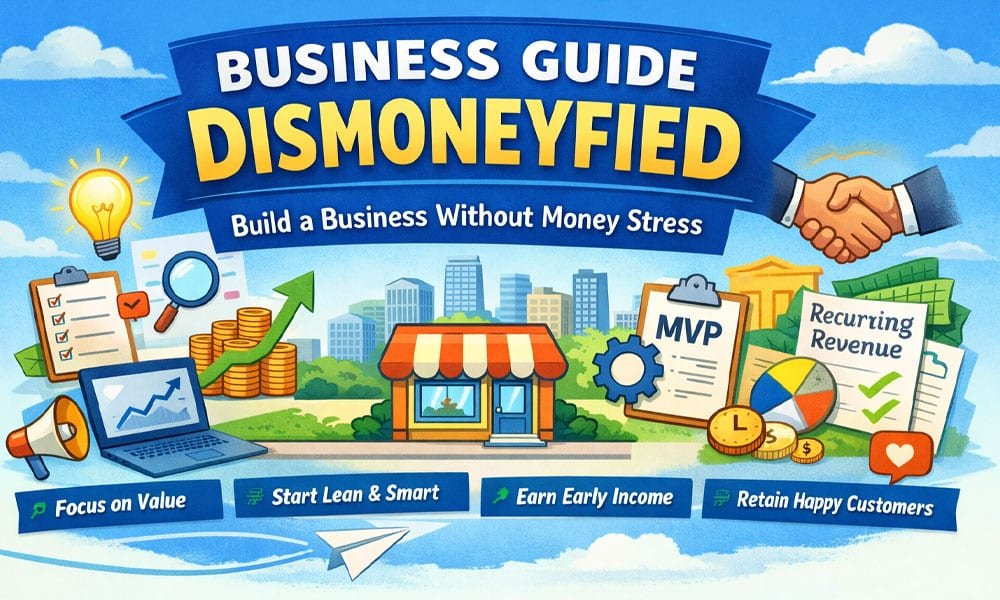
That’s why the Business Guide Dismoneyfied idea matters. It’s not about ignoring money. It’s about using money as a tool, not as a boss. In this article, we will walk through a calm and smart way to build a business that grows without stress, without chaos, and without burning you out.
What Is the Business Guide Dismoneyfied?
The Business Guide Dismoneyfied is a simple way of thinking and working. It helps you build a business that can grow without being trapped by money fear. You still care about profit. You still track your numbers. But you stop making panic choices just because you feel pressure.
Think of it like this. Money is important, but it should not control your mind every hour of the day. The goal is to build a business that feels stable. A business you can run for years, not just a few stressful months.
This approach also fits well in 2025, because business is moving fast. Tools are easier. Markets change quickly. Customers have more choices. So you need a method that keeps you clear, focused, and steady—without getting lost in hype.
Why the Business Guide Dismoneyfied Feels So Refreshing
A lot of business advice sounds loud. It tells you to hustle harder. It tells you to scale fast. It tells you to do ten things at once. And if you can’t keep up, you feel like you are failing.
But here’s a simple truth. Being busy is not the same as making progress. You can work all day and still feel stuck if your actions are not tied to real outcomes.
The Business Guide Dismoneyfied feels refreshing because it brings things back to basics. It says: focus on value first. Build simple systems. Protect your cash. Measure what matters. And grow in a way that actually fits your life.
The Core Rules of the Business Guide Dismoneyfied
At the heart of the Business Guide Dismoneyfied are a few clear rules. These rules help you avoid chaos and build strong habits.
First, every strategy starts and ends with the customer. If the customer wins, your business wins. If the customer does not get real value, the business will always struggle, no matter how good your marketing looks.
Second, systems matter more than motivation. Motivation goes up and down. Systems stay. A good business is a set of routines you can teach, repeat, and improve.
Third, numbers are your friends. Not numbers for ego, but numbers for clarity. When you measure the right things, you stop guessing. You stop reacting with fear. You start making calm choices.
Define Your Value Offer (So People Buy)
Before you build anything big, you need a clear value offer. This means you should be able to answer a few simple questions.
Who is buying? What do they want most? What pain do you solve? And why should they choose you instead of someone else?
Here’s a quick example. Imagine you run a small design service. A weak value offer is: “I do logos.” A strong value offer is: “I help small shops get a clean brand look in 7 days, so they can look more trusted and sell more.” See the difference? One is vague. One is clear and helpful.
In the Business Guide Dismoneyfied, your value offer should be so simple that anyone in your team can say it out loud without thinking. If your value offer is confusing, people won’t buy. If it is clear, you will grow faster with less stress.
Start Small With an MVP (Minimum Product)
Many people waste money because they build too much too soon. They try to create the “perfect” product. They add features nobody asked for. They spend months building… and then they launch to silence.
That’s why the Business Guide Dismoneyfied pushes the idea of an MVP. MVP means “minimum product.” It is the smallest version of your product that still solves the customer’s real problem.
For example, if you want to build a course platform, you don’t need a fancy website on day one. You can start with one clear offer, a simple payment link, and a basic private group. If people buy and enjoy it, you improve it slowly.
This keeps your costs low. It also protects your energy. And it gives you feedback early, so you build what people actually want—not what you guess they want.
Business Guide Dismoneyfied Early Revenue Ideas
A big part of the Business Guide Dismoneyfied is a simple idea: revenue should come early. Not because money is everything, but because early revenue gives you safety and control.
One smart method is pre-sales. This means you sell your offer before it is fully built. If people pay early, it proves your idea is real. It also helps fund the work without loans.
Another method is offering services while you build a product. For example, if you want to build a marketing tool later, you can start by offering marketing help as a service now. You earn, learn, and build trust at the same time.
A third method is subscriptions. Even a small monthly plan can create steady income that helps you plan better. When your income becomes more predictable, your stress drops.
Business Guide Dismoneyfied Lean Operations (Cut Waste)
Once money starts coming in, many businesses make a mistake. They start spending too fast. They add tools they don’t need. They hire too early. They build a big setup before the business is ready.
The Business Guide Dismoneyfied says: keep operations lean. Lean means you use your resources in a smart way. You cut waste. You focus on what truly helps the customer.
This can be simple. Use free or low-cost tools when possible. Outsource small tasks that drain your time. Negotiate better rates with suppliers. And keep your workflow simple enough that you can repeat it without stress.
A good question to ask is: “Does this cost help me deliver better value or earn more revenue?” If the answer is no, you probably don’t need it right now.
Business Guide Dismoneyfied Cash Discipline (No Panic)
Let’s talk about the part many people avoid: cash discipline. This sounds serious, but it can be very simple.
Cash discipline means you always know your basic money situation. You know how much comes in. You know how much goes out. You know how long you can survive if sales slow down.
In 2025, this is more important than ever because markets can change fast. Ads can get expensive. Trends can shift. A stable business is the one that watches cash like it watches time.
This is where ideas like burn rate and runway matter. Burn rate is how much money you spend each month. Runway is how many months you can keep going with the cash you have. When you know these numbers, you stop guessing. You stop panicking. You can plan calmly.
Also, set simple safety rules. For example: “I will keep at least 3 months of basic expenses in reserve.” And: “I will not sell at a price that kills my profit just to look busy.” These small rules protect your business like a seatbelt.
Business Guide Dismoneyfied Data and Simple Tracking
Now that your cash rules are clear, the next step is simple tracking. In 2025, we have tools for everything. But you do not need fancy systems to make smart choices. You just need the right numbers, checked in a calm and regular way.
The Business Guide Dismoneyfied idea is not “track everything.” It is “track what matters.” That means a small dashboard you can understand in one minute. Money in. Money out. Profit. Leads. Sales. Customer happiness. That’s enough for many businesses.
Here’s a helpful example. Let’s say you run a small service business. You can track: how many calls you booked this week, how many became paying clients, and how much profit you kept after costs. When you see the real numbers, you stop guessing. You stop relying on mood. You can make better moves without stress.
A simple habit also helps a lot: weekly metrics talks. It can be just 20 minutes with your team. Look at the dashboard. Ask: “What worked?” “What didn’t?” “What should we stop doing?” This is how calm businesses stay sharp.
Business Guide Dismoneyfied Customer Retention and Loyalty
Many people think growth means getting new customers every day. But here is the truth. Keeping good customers is often easier and cheaper than finding new ones. That’s why retention matters so much in the Business Guide Dismoneyfied method.
Start by learning two simple ideas: churn and LTV. Churn means people leaving. LTV means how much a customer is worth over time. You don’t need complex math. Just ask: “Do customers stay?” and “Do they come back again?”
A simple story shows this well. Imagine you own a small online store. You work hard to get 100 new customers. But if 80 of them never return, you will always feel pressure to chase new people. Now imagine you improve your service so 40 people return next month. Suddenly, your business feels lighter. You spend less on ads. You get repeat sales. You feel more stable.
To improve retention, focus on the journey. Make onboarding smooth. Give clear steps. Answer questions fast. And create “save steps” for at-risk customers. For example, if someone stops replying, you can send a friendly message: “Hey, I noticed you paused. Do you need help?” Small care creates big trust.
Also, loyalty does not mean random discounts. It means rewarding real support. A thank-you bonus. A free upgrade. Early access. A helpful guide. When customers feel valued, they stay longer.
Channels That Work (And Channels to Quit)
In 2025, there are so many channels. Social media. Search. Ads. Marketplaces. Partners. Cold emails. And it’s easy to feel like you must be everywhere. But the Business Guide Dismoneyfied approach says: don’t spread yourself thin.
Instead, audit your channels every quarter. Ask two simple questions: “Which channel brings real sales?” and “Which channel brings profit?” Because revenue without profit can still break you.
Here’s an easy example. Let’s say you sell a product through a marketplace. You get many sales, but the fees are high. You also run ads that bring traffic, but cost too much. If the margin is weak, those channels may be draining your business. You can reduce them, fix pricing, or move focus to your direct channel.
Owning your primary channel is a smart move. This can be your website, your email list, or direct sales calls. When you control the channel, you control the rules. You are not fully dependent on an outside platform changing its fees or algorithm.
Also, don’t copy competitors just because they do something. Many competitors are also guessing. Your business should follow results, not trends.
The 90-Day Business Guide Dismoneyfied Review Routine
Most businesses fail for one simple reason. They don’t check reality often enough. They keep moving fast, but never stop to ask: “Is this working?” The Business Guide Dismoneyfied solves this with a rolling 90-day review.
Every 90 days, do a “reality check.” Bring your key numbers. Compare your plan to what actually happened. Metric by metric. If sales went up, ask why. If profit dropped, ask why. If churn increased, ask why.
Invite honest feedback too. Even disagreement is useful. Sometimes the team sees problems the owner misses. This is not about blame. It’s about clarity. A calm business is a business that faces truth early.
One powerful tool here is a decision log. When you change something, write down why. Example: “We paused this ad because the cost went up and profit went down.” Then check it later. If results improve, great. If not, adjust again. This keeps your strategy clean and real.
Also, use the 90-day review to move resources. Put more time and money into what works. Cut what does not. And do it quickly, not emotionally.
Security and Safety Basics (Don’t Lose It All)
Security might not feel exciting, but it matters a lot. One small mistake can erase months of work. That’s why the Business Guide Dismoneyfied includes simple security habits.
Start with the basics. Use two-factor login on all key accounts. Email, payment tools, social accounts, website logins, and file storage. This one step blocks many common attacks.
Also, keep backups. In 2025, many businesses run online. If a file is lost or a site breaks, you need a fast recovery plan. Backups give you peace.
Train your team too. Most problems happen through simple mistakes, like clicking bad links or sharing passwords. A short monthly reminder can save you big trouble. Keep security routines simple, repeatable, and updated.
Common Mistakes to Avoid (So You Don’t Burn Out)
Even with a strong plan, some traps can pull you back into stress. The first trap is mixing speed with progress. Being busy can feel good, but if your work is not tied to outcomes, you are just tired.
Another trap is keeping pet projects too long. Sometimes we love an idea because it feels personal. But if it doesn’t help customers or profit, it may be a distraction. The Business Guide Dismoneyfied mindset says: be kind, but be honest. Kill slow projects before they eat your time.
A third trap is offering too many things at once. Too many offers confuse customers and drain your focus. One clear offer is often stronger than five weak ones.
And finally, don’t ignore the outside world. Markets change fast. Tools change. Customer needs change. Your routines must include simple external checks, like reviewing competitor moves, pricing changes, or new customer feedback. You don’t need to panic. You just need awareness.
Conclusion
Let’s bring everything together in a simple way.
The Business Guide Dismoneyfied helps you build a business without money stress by focusing on clear value, early revenue, lean systems, cash safety rules, and smart tracking. It replaces chaos with routine. It replaces guessing with data. And it replaces burnout with steady growth.
If you want a business that lasts in 2025 and beyond, this approach is worth following. You don’t need loud hype. You don’t need “grow at any cost.” You need clarity, discipline, and repeatable steps.
So here’s your simple next move. Pick one thing from this guide and apply it today. Maybe it’s your value offer. Maybe it’s a weekly dashboard. Maybe it’s cutting a useless expense. Small clean steps lead to big results over time.
FAQS
What does “Business Guide Dismoneyfied” really mean?
The Business Guide Dismoneyfied means building a business without letting money fear control every decision. You still care about profit and cash flow, but you treat money like a tool, not a boss. The goal is calm growth, clear systems, and smart choices that protect your peace and your business at the same time.
Is the Business Guide Dismoneyfied saying “money doesn’t matter”?
No. Money matters a lot. The point is to stop chasing money in a panic way. The Business Guide Dismoneyfied approach says: focus on value, protect profit, track your numbers, and build stability. You respect money, but you don’t let it run your whole life.
Who should use the Business Guide Dismoneyfied method?
It works well for:
-
New business owners who feel stressed about money
-
Small business owners who want steady growth
-
Freelancers who want clear offers and simple systems
-
Startup founders who don’t want to depend on investors
-
Anyone who wants a business that supports life, not consumes it
If you feel overwhelmed by money decisions, this method is a strong fit.
Can I still grow fast using the Business Guide Dismoneyfied?
Yes, you can grow fast. But it should be “smart fast,” not “crazy fast.” The Business Guide Dismoneyfied focuses on growth that you can handle and sustain. You don’t grow in a way that breaks your cash, ruins your service, or burns you out.
What is the first step I should take if I’m starting today?
Start with your value offer. Ask:
Then write a simple one-line pitch. If your offer is clear, marketing becomes easier, sales become easier, and everything feels less stressful.
What is an MVP, and why is it important in this approach?
An MVP is a “minimum product.” It’s the simplest version of your product or service that still solves a real problem. The Business Guide Dismoneyfied supports MVPs because they:
It’s a smart way to start small and learn quickly.
How do I make early revenue without a big budget?
The article shares three easy early revenue ideas:
-
Pre-sales: sell before you fully build
-
Services: offer a service now while you build later
-
Subscriptions: create steady monthly income
Even a small early income can reduce stress because you are not building in the dark.
What numbers should I track in a simple weekly dashboard?
Keep it simple. In the Business Guide Dismoneyfied, most people can track:
You don’t need 50 numbers. You need the few that guide real decisions.
Why does retention matter more than getting new customers?
New customers usually cost more to get (ads, time, effort). Retention means customers stay and buy again. When retention improves:
-
profit becomes more stable
-
marketing pressure goes down
-
the business feels safer and calmer
That’s why the Business Guide Dismoneyfied treats retention as a key growth strategy, not a “nice extra.”
How often should I review my strategy and make changes?
Use a weekly and quarterly rhythm:
-
Weekly: short metrics check (what worked, what didn’t, what to change)
-
Every 90 days: a full “reality check” review
This is how the Business Guide Dismoneyfied stays real, updated, and strong in 2025.