Blisters have a way of humbling people. You can be fit, well-prepared, and wearing “good boots” and still end up limping back to the car because one little hotspot turned into a full-blown problem.
Trail injuries often start the same way: pressure plus friction, repeated over hours, on a foot that’s swelling, warming up, and shifting around as the terrain changes. And one of the biggest reasons that pressure gets concentrated in the wrong places is surprisingly simple.
Your toe box is too narrow.
A wide toe box doesn’t just feel nicer. It changes the mechanics of how your foot sits, spreads, and stabilises inside the boot. It reduces the squeeze that creates hotspots, it gives your toes room to move, and it makes downhill sections less punishing.
REI’s boot-fitting advice is blunt in a good way: hiking footwear should fit snug everywhere but tight nowhere, and you should have room to wiggle your toes.
That toe wiggle room is where blister prevention often begins.
Why the toe box is the “blister zone” on hikes
On pavement, you can get away with a mediocre fit. Trails don’t let you.
On a hike, your forefoot is constantly doing micro-adjustments:
- gripping slightly on uneven ground
- spreading under load during mid-stance
- shifting forward on descents
- swelling as the day goes on
If the toe box is tight, those natural movements get blocked. The skin starts rubbing against the boot (or against neighbouring toes), and your foot starts taking pressure in places it wasn’t designed to.
There’s research behind this too. A peer-reviewed study on toe box shape found that toe box contours can significantly influence pressure applied to the forefoot and toe region. In other words, shape matters, and it can change peak pressures in the toe area.
So when hikers say, “My boots are great except they destroy my toes,” they’re usually describing a predictable fit mismatch, not bad luck.
The two trail scenarios that punish narrow toe boxes
1) Downhill “toe bang” and bruised nails
Downhill is where narrow or short toe boxes get exposed. Your foot naturally slides forward. If the boot doesn’t hold the heel securely, that slide increases. Then your toes start hitting the front repeatedly.
Backpacker points out that bruised or lost toenails usually come from pressure inside the shoe, especially on downhills, and even toenail length can make it worse when it presses into the boot.
A wide toe box won’t fix poor heel hold on its own, but it gives your toes a fighting chance when the slope turns mean.
2) Side pressure and interdigital rubbing
On uneven trails, your forefoot can press into the sides of the boot. If the toe box is narrow or tapered, that pressure becomes friction. If your toes are squeezed together, you can also get rubbing between toes, which is a blister factory.
FootCareMD’s fit guidance is clear that toe box depth and space matter. If the toe box is too small, toes rub and you can end up with calluses or sores.
What “wide toe box” actually means in hiking boots
A true wide toe box is not just a wider size label. It’s a forefoot design that:
- gives more lateral space for toe splay
- reduces taper at the front
- often adds a bit more vertical room (depth)
The shape matters as much as the width.
AAOS notes that shoe parts like the toe box and heel counter influence fit, and that a stiff heel counter improves heel control and stability.
That matters because wide in the front should not mean sloppy in the back.
The best setup is: roomy toes + locked-in heel.
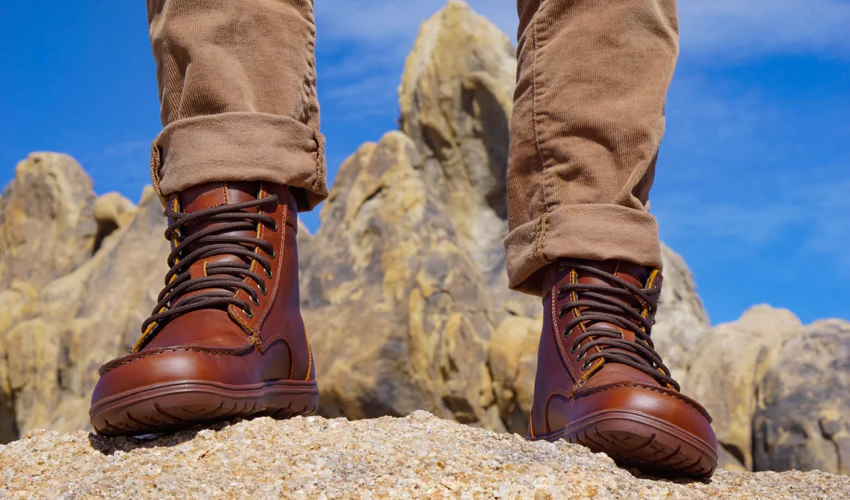
If you want to compare options built around that design approach, here’s a good starting point: wide toe box hiking boots.
Blister prevention: the real “science” is friction management
Blisters aren’t mysterious. They’re friction plus heat plus time.
The American Hiking Society puts it plainly: moisture increases friction, friction is the key ingredient in blister formation, and changing into dry socks at the first sign of a hotspot is one of the simplest prevention moves.
So, preventing blisters is usually about controlling three things:
- fit (especially in the toe box and heel)
- moisture (socks, breathability, drying strategy)
- early intervention (hotspot treatment before it becomes a blister)
A wide toe box helps with #1 by reducing pressure and squeezing where blisters love to form.
Who benefits most from wide toe box boots?
Plenty of hikers do, but these groups feel the difference fast:
Hikers with naturally wide forefeet
If your little toe is always the first thing to complain, you’re likely compressing a wide forefoot into a narrow front.
Hikers who swell on longer days
Even modest swelling turns a “fine” boot into a problem by hour four. Room in the toe box buys you breathing space.
Anyone who keeps losing toenails or bruising them
If downhill hikes leave your nails angry, this is a big hint: you need more toe room, better heel lock, or both.
People with bunions, hammertoes, or toe crowding
Wide toe boxes reduce pressure on prominent joints and reduce rubbing between toes.
Hikers who wear thicker socks
Thicker socks can make a borderline toe box turn into a squeeze. A roomier boot gives you options across seasons.
Hikers with diabetes or reduced sensation
If you have diabetes, foot protection matters more because small injuries can escalate and sensation may be reduced. Many diabetes foot-care guides emphasise well-fitting footwear and avoiding rubbing.
What to look for in wide toe box hiking boots
You don’t need a technical checklist the length of a trekking pole. Focus on a few high-impact details.
Toe box width and shape
The boot should look less tapered at the front. You should be able to wiggle toes freely, not just “fit inside.”
Toe box depth
Depth prevents top-of-toe rubbing, especially on descents. FootCareMD specifically calls depth out as a fit factor to avoid toe rubbing and sores.
Secure heel hold
This is the real downhill protector. If the heel lifts, your foot slides forward and your toes take the hit. AAOS explains that a stiff heel counter improves heel control and stability.
A stable platform
A wide toe box works best when the outsole platform actually supports that width. If the base is narrow, the foot can feel like it’s spilling over, which increases fatigue and instability.
Breathability vs waterproofing (be honest about your trails)
Waterproof boots can be great in wet UK conditions, but breathability matters for blister prevention because sweaty feet increase friction. If you run hot, look for designs that manage moisture well.
Fit rules that prevent most hiking injuries
Here’s a simple approach that works without overthinking.
Try boots later in the day
Feet are often larger later. If you buy boots first thing in the morning, you may underestimate your real hiking volume.
Use the “finger width” guideline as a baseline
FootCareMD suggests roughly 3/8″ to 1/2″ between your longest toe and the end of the shoe (about a finger’s width).
That toe allowance matters on descents.
Do a downhill simulation before you commit
If you’re in a shop with a ramp, use it. If not, do a quick test:
- lace normally
- walk briskly
- stop suddenly
- pay attention to toe contact
If you feel the front immediately, it will get worse outside.
Don’t buy “almost comfortable”
FootCareMD also warns against assuming shoes will stretch to fit.
Hotspots in the shop become blisters on the trail.
The lacing trick that saves your toenails
Many hikers blame the toe box when the real issue is heel slip.
A wide toe box plus sloppy heel hold can still lead to toe bang. Before changing boots, try this:
- Use a heel-lock / runner’s knot on steep descents
- Re-lace at the top of climbs if your foot starts shifting
- Keep the forefoot comfortably snug, not tight
The goal is simple: prevent your foot sliding forward, so your toes don’t become battering rams.
Hotspot protocol: what to do the moment you feel rubbing
This is where experienced hikers separate themselves from everyone else. They don’t “push through.” They stop early.
The American Hiking Society recommends changing socks at the first sign of a hotspot and using moleskin “donuts” to reduce pressure on blisters.
A practical trail routine looks like this:
- stop as soon as you feel a hotspot
- dry your foot
- remove grit or debris (even a tiny bit can cause trouble)
- apply tape or moleskin before the skin breaks
It feels like you’re wasting time. You’re not. You’re buying back your entire hike.
Beyond blisters: other injuries wide toe boxes can help reduce
Forefoot bruising and metatarsal soreness
When toes and forefoot are compressed, pressure concentrates. Wider toe boxes distribute that load more naturally.
Corns and calluses from repeated rubbing
Toe crowding creates predictable rubbing patterns. Room reduces them.
Balance fatigue on uneven terrain
Toes contribute to stability. If they’re squeezed, you often feel more tired, especially on rocky trails.
Who shouldn’t “self-diagnose” with boots alone
If you have:
- numbness that’s worsening
- persistent pain in one area
- swelling that’s sudden, one-sided, hot, or painful
- signs of infection (increasing redness, heat, discharge)
…don’t treat it as a boot problem and hope it fades. Get it checked.
Footwear can reduce triggers, but it can’t diagnose what’s going on.
FAQ
Do wide toe box hiking boots prevent blisters completely?
They reduce a major cause: toe crowding and side pressure. But moisture and socks matter too. The American Hiking Society highlights moisture as a friction multiplier and recommends keeping a dry pair of socks available.
How much toe room should I have for hiking?
A common baseline is around a finger width (roughly 3/8″–1/2″) in front of the longest toe.
More aggressive downhill hikers often appreciate slightly more, as long as the heel is secure.
If my toes still hit the front downhill, is the boot too small?
Not always. It can be heel slip. Try heel-lock lacing first. If the heel is secure and you still hit the front, you likely need more length and/or a better toe box shape.
Are wide toe box boots only for wide feet?
No. They’re also useful for swelling, thicker socks, bunions, and people who repeatedly get bruised nails on descents.
Does toe box shape really matter, or is width enough?
Shape matters. Research shows toe box contours can influence forefoot and toe-region pressures and peak pressures.
Will a wide toe box make the boot feel sloppy?
It shouldn’t, if the heel and midfoot are designed well. AAOS notes a stiff heel counter improves heel control and stability.
Roomy toes + stable heel is the sweet spot.
What socks help most with blister prevention?
Moisture-wicking hiking socks (not cotton) and having a dry spare pair. The American Hiking Society specifically recommends changing socks when damp to reduce friction.
Should I “break in” boots before a long hike?
Yes, but don’t confuse break-in with hotspots. A boot that causes early rubbing is warning you, not “settling in.”
How do I test boots properly in a shop?
Walk briskly, turn, and simulate downhill if possible. Make sure you can wiggle toes and that the heel doesn’t lift. REI emphasises snug-but-not-tight fit and toe wiggle room.
The best blister prevention is boring, and that’s good
The most reliable hiking improvements aren’t dramatic. They’re practical.
A wide toe box won’t make you faster. It will make you more comfortable, more stable, and less likely to end your day with damaged skin and bruised nails. Combine it with secure heel hold, smart socks, and early hotspot care, and you’ll dramatically reduce the two things that ruin trail walks: blisters and foot pain.