
Tech
Accelerating Language Acquisition Through Contextual Immersion

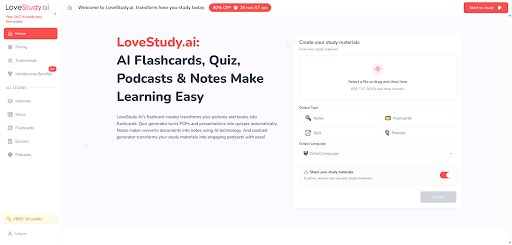
The greatest hurdle in learning a new language is the “intermediate plateau,” where a learner has mastered the basics but struggles to bridge the gap to fluency. Traditional methods often rely on pre-packaged vocabulary lists that lack context, leading to rote memorization without genuine understanding. This disconnect creates a situation where a student can pass a test but fails to comprehend a real-world conversation. To overcome this, linguists advocate for “comprehensible input”—consuming content that is slightly above one’s current level. AI Flashcards provide the technological infrastructure to turn this theory into practice, allowing learners to instantly convert native-level content—be it news articles, podcasts, or novels—into personalized study materials that bridge the gap between passive listening and active vocabulary acquisition.
Moving Beyond Pre-Packaged Vocabulary Lists
Most language apps force users down a linear path of generic words (e.g., “apple,” “boy,” “cat”). However, adult learners often need specific vocabulary relevant to their careers or interests.
Mining Vocabulary From Authentic Native Content
The power of LoveStudy AI lies in its ability to process “unstructured” data. A user can take a Spanish news article about economics or a French recipe blog and feed it into the system. The AI does not just translate the text; it identifies the complex vocabulary and idiomatic expressions within that specific context. It then generates study tools that focus on these targeted terms. This means the learner is studying words they actually encountered in the wild, which creates a stronger emotional and cognitive hook for memory retention compared to a random list.
The Importance Of Audio Integration For Pronunciation
Language is primarily an auditory experience. Reading a word is insufficient if one cannot recognize it when spoken. The integration of audio generation into the study workflow addresses this directly. When the system creates a flashcard or a note summary, it can also generate the corresponding audio. This allows the learner to shadow the pronunciation, training their ear to distinguish subtle tonal differences or rapid speech patterns that are often lost in written text.
A Workflow For Turning Media Into Language Lessons
The process simulates the workflow of a dedicated linguistic tutor, breaking down complex native content into digestible learning units.
Step 1: Inputting High Interest Native Material
The learner begins by sourcing material that genuinely interests them. This could be a PDF of a foreign novel, a transcript of a YouTube video, or a recording of a conversation. The platform’s ability to handle multimedia inputs is crucial here. By uploading an audio file of a podcast, the user can leverage the AI to transcribe and analyze the spoken content, turning a passive listening exercise into an active study session.
Step 2: Extracting And Categorizing Linguistic Data
Once the material is uploaded, the AI performs a linguistic analysis. It separates the known grammar structures from the unknown vocabulary. The user then selects the output:
- Vocabulary Building: Generate Flashcards for all words classified as “B2” or “C1” level.
- Comprehension Check: Generate a Quiz to test understanding of the article’s main arguments.
- Grammar Review: Use the Notes feature to highlight and explain complex sentence structures found in the text.
Step 3: Active Recall And Spaced Repetition
The final step is the review. The generated cards are not static; they are part of a system designed for repetition. The learner reviews the extracted vocabulary, using the “Podcast” feature to listen to the words in context sentences. This cyclic process—consume, extract, review—ensures that new words are moved from short-term memory to long-term storage efficiently.
Comparing Generic Apps Versus Custom AI Generation
The difference between using a standard language app and an AI-generated workflow is the difference between a set menu and a la carte dining.
Flexibility In Language Learning Tools
| Feature | Standard Language App | AI Content Generation |
| Content Source | Pre-determined by developers | Chosen by the user (News, Books, etc.) |
| Relevance | Generic (Travel, Basics) | Highly specific (Medical, Legal, Slang) |
| Audio Quality | Standard studio recordings | AI synthesis of specific inputs |
| Learning Pace | Locked to the app’s levels | dictacted by the user’s input material |
| Context | Isolated sentences | Full paragraphs/articles as context |
| Cost Efficiency | Subscription for limited content | Tool for unlimited content creation |
This comparison highlights that for serious learners, the ability to control the input source is the defining factor for success.
Breaking The Sound Barrier With Podcast Generation
One of the most innovative applications for language learners is the ability to create “synthetic immersion” environments.
Turning Reading Materials Into Listening Exercises
Reading proficiency often outpaces listening proficiency. By using the Podcast generator, a learner can take a written text they have just studied and convert it into a dialogue or a monologue. Listening to this generated audio forces the brain to process the same information through a different sensory channel. This is particularly effective for “shadowing”—a technique where the learner repeats the audio immediately after hearing it—which is essential for developing prosody and rhythm in a new language.
Immediate Feedback Loops Through Quizzes
Finally, the fear of making mistakes often holds learners back. The Quiz feature provides a safe space to fail. By generating a test based on the article just read, the learner can verify their comprehension without the pressure of a real conversation. If they misunderstand a paragraph, the quiz results reveal the gap immediately, allowing for instant correction before the error becomes fossilized.






How an AI Android App Builder Makes Mobile App Creation Easier

Why Raised Logos Are Becoming Popular in Streetwear

The 2026 AI Image Tool Collector’s List: Best Picks Worth Bookmarking

First Home Away From Home: A Guide to Choosing Student Accommodation in the UK

Family Dental Care Jacksonville West Side: Why Blanding Boulevard Families Are Choosing One Office for Everything

The £10k, £25k and £50k Renovation: Where Could Your Home Improvement Budget Go?

Igniting the Spark of Skills! WorldSkills Shanghai 2026 Announced the Second Cohort of Dream Ambassadors

Blocked Drain Repair: From Diagnosis to a Long-Term Solution

A Calm, Structured Approach to Practical-Test Preparation

The Fastest Way To Buy Rakhi Online When You Have Forgotten The Date In The UK

Revolutionizing Healthcare: The Emergence of AI-Driven Analytics

Carol Kirkwood’s Journey: Her Real Age, Husband, Career, and More

Body Positivity and Bodycon: Embrace Your Shape with Homecoming Dresses

Aliza Barber: Meet Lance Barber’s Wife, Age, Life, Profile, Career and Net Worth

How Machine Learning and AI are Redefining the Future?

Evelyn Melendez: Jordan Knight’s Wife Bio, Marriage, Family, Career and Net Worth

Ilan Tobianah Biography: Family, Marriage, Lifestyle, Career and Net Worth

Who was Alice Marrow? Everything to Know About Ice-T’s and His Mother

King Von’s Autopsy Report: The Truth Behind the Tragic Death

Tea Leoni and Tim Daly Split – A Closer Look at Their Relationship and Breakup
How an AI Android App Builder Makes Mobile App Creation Easier
Why Raised Logos Are Becoming Popular in Streetwear
The 2026 AI Image Tool Collector’s List: Best Picks Worth Bookmarking
First Home Away From Home: A Guide to Choosing Student Accommodation in the UK
Family Dental Care Jacksonville West Side: Why Blanding Boulevard Families Are Choosing One Office for Everything
The £10k, £25k and £50k Renovation: Where Could Your Home Improvement Budget Go?
Igniting the Spark of Skills! WorldSkills Shanghai 2026 Announced the Second Cohort of Dream Ambassadors
Blocked Drain Repair: From Diagnosis to a Long-Term Solution
A Calm, Structured Approach to Practical-Test Preparation
The Fastest Way To Buy Rakhi Online When You Have Forgotten The Date In The UK
-
 Health3 years ago
Revolutionizing Healthcare: The Emergence of AI-Driven Analytics
-
 News1 year ago
Carol Kirkwood’s Journey: Her Real Age, Husband, Career, and More
-
 Fashion2 years ago
Body Positivity and Bodycon: Embrace Your Shape with Homecoming Dresses
-
 Celebrity2 years ago
Aliza Barber: Meet Lance Barber’s Wife, Age, Life, Profile, Career and Net Worth